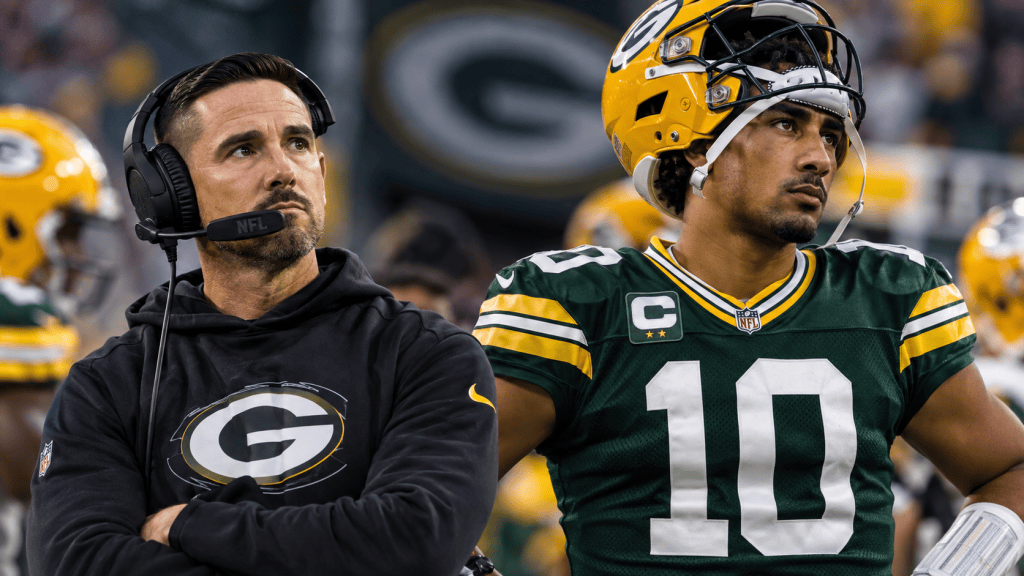
The Green Bay Packers have had a slow start to the season with a 1-2 record, most recently adding a 35-14 loss at home to the Atlanta Falcons. Heading into the 2026 season, the Packers had some apparent problems that they had to overcome: Josh Jacobs’ court case, when Micah Parsons would be able to return, and the uncertainty of the offensive line.
Those problems that at first seemed manageable have become urgent issues the Packers are forced to address early into the season.
The Packers added three veteran offensive linemen in a matter of days. Laken Tomlinson, Maekhi Becton, and Kevin Zeitler all underwent workouts with the team and were signed to hopefully bring some veteran leadership and support to the most unimpressive position for Green Bay thus far.
Three games don’t determine a season, but the Packers are reaching a point where preseason concerns have translated directly into regular-season problems. Depending on how quickly and effectively Green Bay can address these issues could determine how the rest of this season goes.
The Offensive Line Has Forced Green Bay To Add Multiple Veteran Linemen
In the first three games of the season, Green Bay’s quarterback Jordan Love has been under constant pressure from opposing defenses. In last Thursday night’s loss to the Falcons, the Green Bay offensive line combined to allow 28 total pressures, making them the worst offensive line in football according to PFF.
Green Bay’s recent roster additions make it clear the organization agrees change is needed.
The Packers signed veteran guard Laken Tomlinson to the active roster and added the former first-round tackle Mekhi Becton to the practice squad on September 28th. Only two days later, Green Bay had Kevin Zeitler work out for the team and eventually signed him.
These linemen aren’t developmental pieces that the Packers see as a long-term fit; they are players to quickly bolster the starting offensive line and provide some depth and veteran leadership.
These three players provide over 400 games of starting experience in the NFL, something the Packers are lacking on the O-line.
Green Bay wouldn’t have made that kind of investment if they weren’t confident in the offense’s ability to turn it around. Pass protection has been one of, if not the biggest problems thus far in the Packers’ season.
The pressure numbers become even more concerning in the scheme of Matt LeFleur’s offense. Love has been getting the football out faster than any other quarterback in the NFL, with the quickest time to throw. This suggests the issue isn’t Love; in fact, he’s doing everything in his power to overcome the poor offensive line performance.
The problems up front have also contributed to the Packers’ lack of a run game.
Green Bay has 146 rushing yards through the first three games this season, coming out to an average of just 48.7 yards per game. An offense becomes considerably easier to defend when it can’t establish the run.
Defenses can attack the quarterback without having to respect the possibility of being punished on the ground. This puts even more responsibility and pressure on Love and a struggling offensive line, creating an unbreakable cycle for the Packers.
The new additions could help.
Tomlinson and Zeitler provide experience on the interior of the line, while Becton has the ability to play both tackle and guard. The question now is how quickly Green Bay can get them comfortable enough to make a difference.
Offensive line isn’t as easy as putting the five most talented guys on the field. Chemistry plays a huge role in a line’s performance, and was something the Packers front office kept in mind when deciding who the week one starters would be.
Bringing in three veterans during the season could improve the talent and depth, but the Packers need to find a way to improve the team’s chemistry on the fly.
Injuries Are Making Offensive Problems Even Worse
The Packers’ offensive-line issues aren’t entirely performance-based. Green Bay has once again been forced to deal with unfortunate injuries throughout the position.
Right tackle Zach Bako-Bewele was placed on injured reserve after suffering a torn patellar tendon in the same knee as last season against the New York Jets. Starting guard Aaron Banks has dealt with knee and toe injuries that have lingered from last year, while Jacob Monk and rookie Jager Burton have also appeared on the injury report.
These constant roster changes have made it even harder for Green Bay to establish a solid starting five.
This was one of the Packers’ biggest issues last season. Green Bay repeatedly shuffled new linemen in and out to manage injuries, preventing the same five players from consistently taking snaps together. Entering this season, the Packers hoped stability would solve their problem; instead, they are already scrambling to sign veteran replacements three weeks into the season.
These injuries aren’t limited to the O-line. Wide receiver Jayden Reed suffered a neck injury that will sideline him for the rest of the season. Losing Reed takes another tenured weapon of Love’s away at a time when they need offensive playmakers.
Reed’s value goes beyond his receiving numbers. He has the ability to move around the formation pre-snap, allowing LaFleur options with motions, screens, and manufactured touches. Not having him on the field means defenses have one less element to worry about on the offensive side.
Perhaps the biggest injury concern of all is still edge rusher Micah Parsons. Parsons is set for a week six return for Green Bay, and it can’t come soon enough. Parsons has the ability to be a game wrecker on the defensive side, so it’s hard to count the Packers out until we see them at full strength.
Injuries happen to every team in the NFL; the challenge for Green Bay is that their injuries have hit positions where the team was already searching for an answer. Figuring out how to bring that consistency back is essential for Green Bay’s rest of season success.
Josh Jacobs’ Absence Has Removed The Centerpiece Of The Run Game
No absence has affected Green Bay’s offensive identity more than the loss of star running back Josh Jacobs.
Jacobs remains on the NFL’s Commissioner’s Exempt List following an offseason incident. There is currently no clear timeline on when or if Jacobs will be able to return to the Packers.
His absence has left the Packers without a premier option in the backfield. Jacobs has been the type of running back an offense can lean on. He can handle heavy workloads and provide that fear factor to opposing defenses, making them plan for the run as much as they do the pass.
Without him, the Packers haven’t found any consistency on the ground. MarShawn Lloyd leads Green Bay with only 68 rushing yards. Chris Brooks and Kaleb Johnson have combined for another 78 yards, making the Packers one of the worst running offenses in the league.
These problems can’t solely be blamed on the running backs. As mentioned earlier, the offensive line has been the root cause of all of Green Bay’s issues.
Jacobs provided room for error with his ability to be a downhill runner and get through contact. Even if the offensive line wasn’t perfect, he could still find a way to gain important yards.
What’s even more important about having a run game is that it opens up opportunities for play-action. Without it, Green Bay is putting all the pressure on Love to move the football, and all while having the least amount of protection in the league.
The new linemen additions hopefully solve some of these issues for Green Bay, allowing them to get back to the offensive production we’ve seen in years past.
Pressure Surrounding Head Coach Matt LeFleur Is Growing
Eventually, the lack of production on the offensive side has to lead back to the person responsible for calling the plays: Matt LeFleur.
LeFleur has built his reputation as an offensive-minded coach during his time in Green Bay, producing some of the most efficient offenses over the past years while developing Love into the quarterback to replace future Hall of Famer Aaron Rodgers.
After the blowout loss to Atlanta, LaFleur described the performance as humbling, acknowledging that Green Bay needed to find answers offensively and fast.
For a team that had playoff expectations going into the season, that is a difficult question to answer only three weeks into the year. These circumstances would be challenging for any playcaller in the NFL, but part of coaching is how well you can adjust when things take an unexpected turn.
If Green Bay can’t consistently create running lanes between the tackles, how is LaFleur supposed to manufacture touches for his running backs? If the offensive line can’t protect Love long enough for deeper concepts to develop, can the Packers lean further into the quick passing attack?
These are the types of adjustments and answers the Packers must find. The front office has made the adjustment of bringing in veteran pieces; now it’s up to the coaching staff to make those pieces fit.
After a disappointing ending to the 2025 season with a Wild Card loss to the Chicago Bears, Green Bay was expected to take another step and become one of the emerging elite teams. Instead, the Packers are trying to avoid falling further behind early in the season.
The next several weeks will reveal a lot about how LaFleur and the Packers can adapt their scheme. Unfortunately for Green Bay, the next few weeks could be the determining factor in a very early NFL season.


Leave a comment